
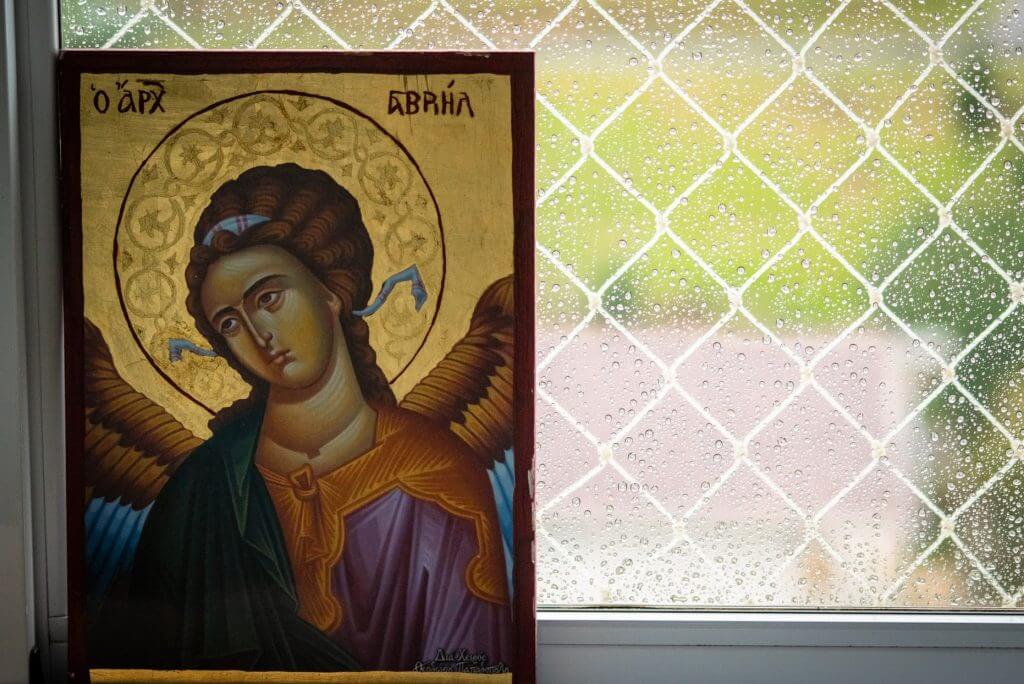
Have you ever looked at an old religious icon and thought it looks strange?
Just some far-removed ancient saint staring back at you, looking kind of bummed? Whether it’s Jesus, Mary, John the Baptist, or some other saint, they certainly don’t look happy.
What do these weird ancient images have to do with my life today? I used to feel that way.
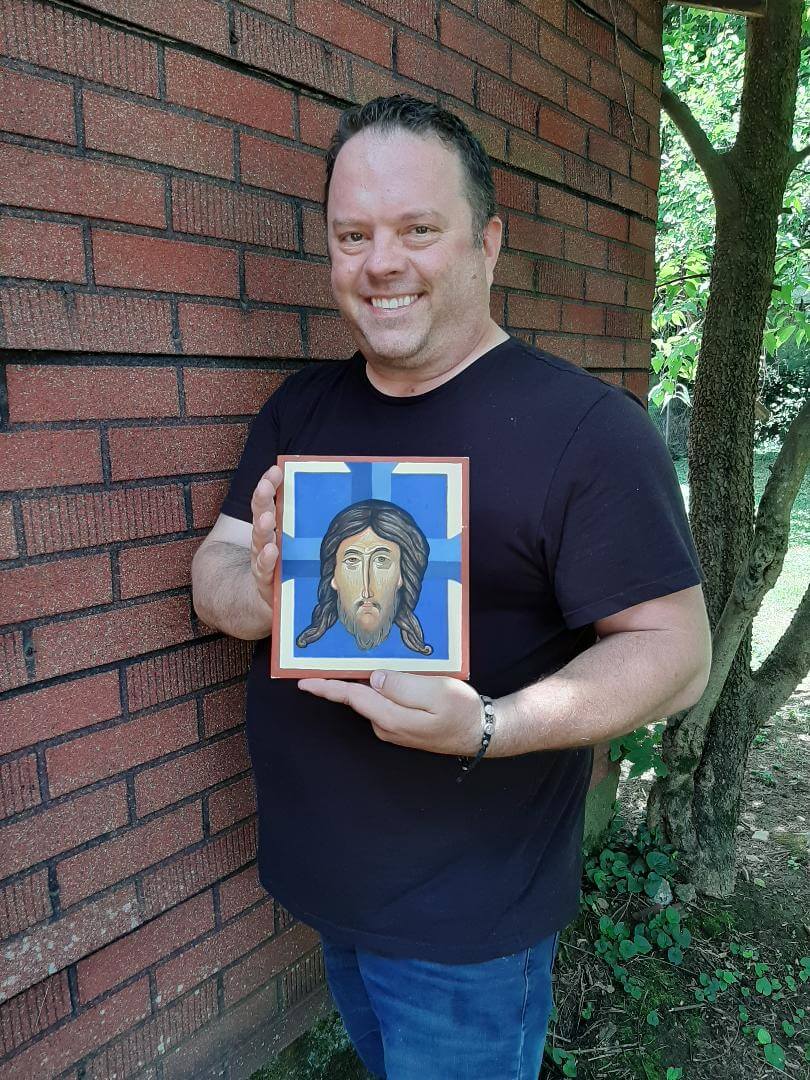
Until, one weekend, I took an icon painting class in the rec room of a church in Los Angeles. It was a two-day course where a British instructor taught us to paint the face of Jesus in the traditional Byzantine style. We each painted (or tried anyway) our own image of Jesus on a small wooden panel.
Using the method of the ancient artisans, we mixed powdered pigment with egg yolk and water to create our “paint.” As we got started, the instructor told us it required a light touch. Our brush should barely stroke the canvas like a bird briefly skimming the ground, then lifting back off.
When he observed my technique, he said my brush stroke looked more like a harrier jet thudding on a runway. Oh, well. I kept trying, and got a little better as the class went on.
My finished painting will never win any awards, but it’s precious to me.
Not because of its artistic brilliance, but because of what the image means.
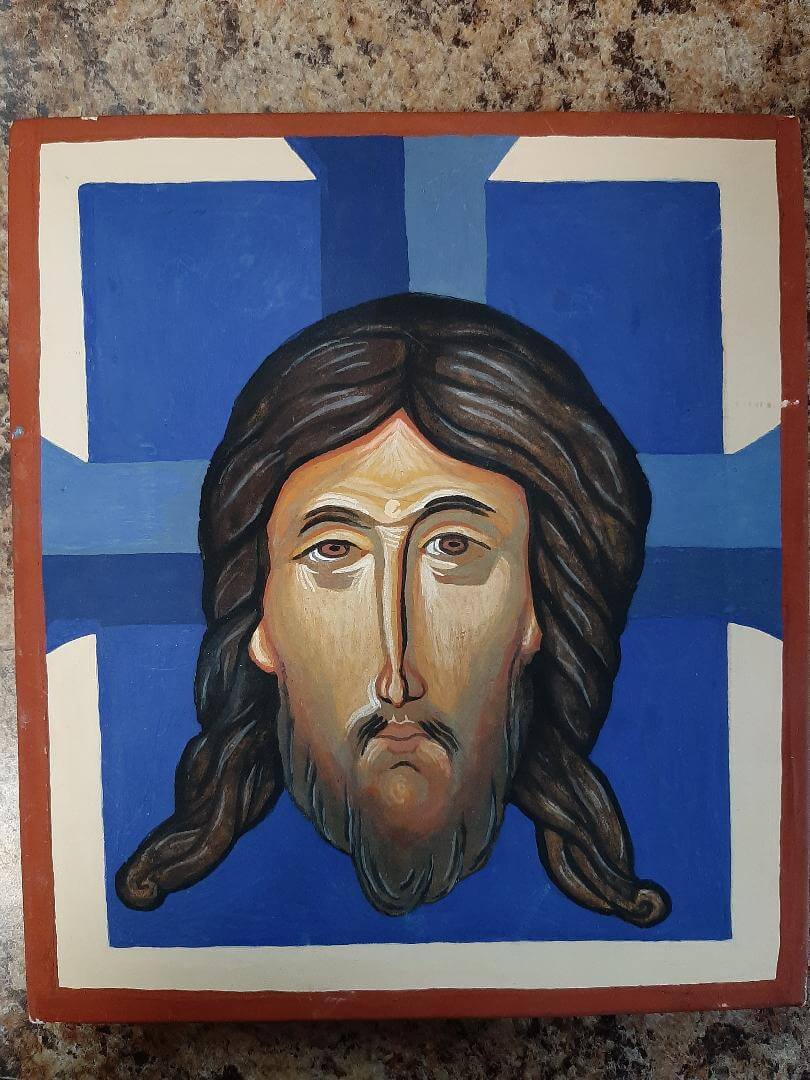
What I never knew until that point is that there is a whole theology behind the style of icons. Every feature of the painting intentionally communicates something about God.
For example, the shadows on the face don’t fall below the features. They project outward because Christ’s light comes from within.
The large eyes, elongated nose, and tall ears are exaggerated on purpose. The mouth is smaller. That’s because, if we wish to be saints, we should look and listen more than we talk. “Know this, my dear brothers: everyone should be quick to hear, slow to speak…” (James 1:19).
One eyebrow is slightly arched to express the fact that God is both happy and sad. It’s called “beautiful sadness.” As He looks at us, God loves us but also grieves for His lost and hurting children.
As I realized all this, the icon was suddenly not just a glum face.
It was the face of God looking back at me with love, revealing His glory and imparting wisdom.
And it occurred to me that every face you see is an icon. As Genesis 1:27 says: “God created mankind in his image.” When you see another person, you see an image of the One who created him or her. We are all icons walking around reflecting the face of God.
As C.S. Lewis said: “There are no ordinary people. You have never talked to a mere mortal. Nations, cultures, arts, civilizations—these are mortal, and their life is to ours as the life of a gnat. But it is immortals whom we joke with, work with, marry, snub and exploit—immortal horrors or everlasting splendors.”
This has implications for the way we see and treat everyone. Whether it’s a friend, an enemy, a date, or a spouse. We should always see another person as an image of God. This will make us better neighbors, dating partners, husbands, and wives. It may sound lofty and esoteric, but it’s true.
Icons once seemed out-of-touch to me.
But now I see they are as practical as a hug or a handshake or holding the door open for someone.
Remember that you are an image of God and so is everyone you meet. When you see a profile picture on CatholicMatch, it’s not just a commodity you skip past if you don’t find them attractive. It’s an icon of the One who made you too.
This doesn’t mean, of course, that you’re obligated to engage every match you see. It’s not a guilt thing. It’s a glory thing. Remember that the person in the photo is a precious creation. Say a prayer for them even if you’re never going to end up dating them.
We are all icons. When we keep this in mind, we will get better at relationships in every form.